The Difference is Why
A personal story about people-pleasing, perfectionism, and discovering that worth was never something to earn.
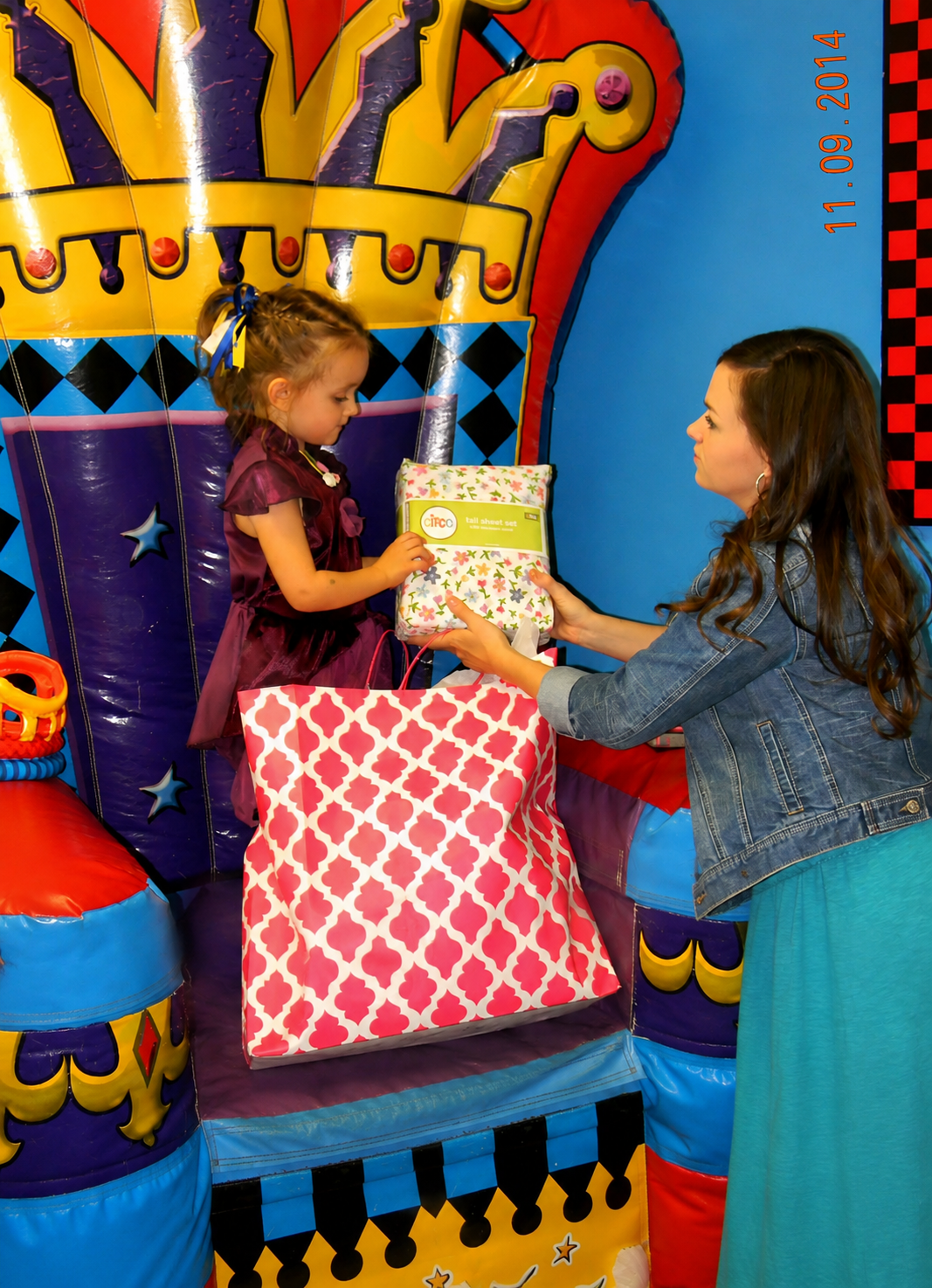
Hi. I'm Shelly.
And I'm a people pleaser.
No, I haven't officially been diagnosed (although if that were a thing, I'd probably qualify). I've spent most of my life believing that being "good" meant making everyone else happy.
I chased "good job." I waited for "thank you." I secretly loved hearing, "I don't know what we'd do without you, Shelly!"
Every compliment felt like proof that I was enough.
The cost, however, was enormous.
Every yes to someone else slowly became a no to myself.
As a little girl, helping people felt like a calling. I believed that's what good people did.
Good daughters helped. Good students helped. Good Christians helped. Good girls helped.
So I helped.
All of those things were ingrained in me as I grew up. And let's be honest, they're ingrained in most girls.
This way of living didn't really catch up to me until I got older.
As I started working full time and raising my girls, I began to feel the weight of always trying to do "the right thing." Raising children is already one of the most physically, mentally, and emotionally demanding jobs there is. It becomes even heavier when you're still trying to live up to an impossible standard you created for yourself years before.
I answered parent emails on the weekends. I volunteered. I stayed late and worked from home. I brought the homemade cupcakes, designed the invitations, and signed up for one more committee.
I said yes.
Then yes again.
The problem wasn't volunteering. The world needs volunteers, and I'm deeply grateful for the people who have given their time to make my own life better.
The problem was me.
I didn't just do the thing—I did it ten times over.
Want a baking-themed birthday party? I've got two dozen chef hats adorned with flowers made from cupcake liners, baking supplies to fill two kitchen cabinets, boxes with individual name tags, and a perfectly designed banner to complement the whole day.
Need cupcakes for a potluck? I'll spend hours looking for the perfect recipe, make them by hand with homemade frosting and chocolate ganache filling, and somehow also make every cupcake liner match the theme.
Throw a baby shower? I've got custom invitations, themed cookies, cake pops, coordinated games, and baby pictures framed on every table.
I do it big.
I've always been someone who gives everything she has. So when I became a teacher, I poured that into my classroom. When I became a mom, I poured it into my home.
Everything looked organized, thoughtful, put together. From the outside, it probably looked like I had it all figured out.
What no one could see was how much of myself it was costing me.
The strange thing about people-pleasing is that it can look a lot like success. People compliment you for always showing up. They thank you for going above and beyond. They tell you they don't know how you do it all.
What they don't see is that you're paying for all of it somewhere else. Every time I made someone else's life a little easier, I was unknowingly making my own a little heavier.
Eventually, I began to slow my roll on some things.
I started saying no.
Not all the time. Not gracefully. But enough to notice something surprising.
Some people didn't like it.
It turns out that when people are used to you always saying yes, your boundaries can feel like rejection. The people who had benefited most from my constant availability often struggled the most when I stopped abandoning myself to meet their needs.
And for someone who had spent her whole life measuring her goodness by other people's happiness, their disappointment felt almost unbearable at first.
Around that same time, as I was unpacking childhood trauma and the struggles in my marriage, I started seeing a therapist.
Looking back, I realize I even carried my people-pleasing into therapy.
I wanted to be the "good" client. The one who was self-aware. The one who was making progress. Sometimes I'd catch myself saying, "I'm fine," or explaining away my feelings before I'd really sat with them. I wanted her to think I was doing okay.
It's funny now because therapy is probably the one place where pretending you're okay completely defeats the purpose. Meanwhile, years-later me is over here like, Girl. Whyyyy? 😂
Anyway, I digress.
I logged into those sessions hoping she'd help me make sense of everyone else.
Instead, she gently helped me make sense of myself.
That's a hard realization—to discover that while you can't control the people who've hurt you, you can change the patterns that keep hurting you.
One therapy session has stayed with me for years.
It was shortly after COVID, so we met virtually. I had spent the first part of the session explaining something that had happened and why it bothered me.
She stopped me.
"Are you at home?"
"Yeah," I said, glancing around the spare bedroom that had become my virtual classroom—ring light, anchor charts, notebooks, and all.
"Do you have anywhere to go today?"
"No..."
"Then, if you don't mind me asking, why are you wearing a full face of makeup?"
I paused.
Then I laughed.
"I don't know," I said. "Err. I just like being ready I guess..."
At least, that's what I thought.
But after the session ended, I couldn't stop thinking about her question.
Why was I wearing makeup in my house with nowhere to go?
Did I feel like I needed to impress her?
Was I trying to look more put together?
Or had I simply become so accustomed to presenting the best version of myself that I no longer knew how to show up any other way?
Before we ended the session, she challenged me to try something.
"Go one day without wearing makeup," she said. "Just notice how it makes you feel."
It sounded simple enough.
Until it was time to leave the house.
Even if I was only running to the grocery store, I felt the urge to get ready first.
That's when I realized something.
I wasn't uncomfortable because my face was bare.
I was uncomfortable because I wasn't hiding behind the version of myself I'd spent years carefully creating.
Somehow, looking "put together" had become about more than mascara and curled hair. It had become part of how I earned respect, part of how I felt acceptable, and part of how I believed I was supposed to show up in the world.
That conversation—and the many therapy sessions that followed—began unraveling something I hadn't even realized I was carrying. Little by little, I started separating who I was from who I thought I needed to be.
If you know me today, you'd probably still describe me as "put together."
I still enjoy curling my hair before I head out. I still enjoy trying a new mascara, adding a pair of lashes, or throwing in a clip-in hair extension when it makes me feel good. I still like getting dressed in an outfit that makes me smile when I catch my reflection.
On the surface, not much has changed.
The difference isn't what I do.
The difference is why I do it.
I don't get ready because I'm worried about what people will think if I don't. I get ready because it's something I genuinely enjoy.
And on the days I don't? That's okay too.
That realization didn't stop with makeup. I started noticing the same shift in every other area of my life.
I still bake the homemade cupcakes sometimes. I still throw themed birthday parties. I still decorate classrooms. I still volunteer.
But I don't do those things because I'm trying to earn my worth anymore.
I do them because they're an expression of who I am—not proof that I'm enough.
I've grown in other ways, too. I've learned to tell my kids no when I can't do something. I've learned to tell parents at school that I can't always go above and beyond, even when I want to. I've learned to tell colleagues, "I need a minute," after a particularly difficult hour.
I've learned that boundaries aren't walls—they're the way I protect my peace. They help me decide who has access to my time, what behavior I'll accept, and how much of myself I'm willing to give.
And the people who truly love me don't need me to abandon myself to prove it.
I used to confuse being needed with being loved. I thought saying yes made me valuable and overdoing everything made me worthy.
It took years—and one observant therapist—to help me realize something:
My worth was never hiding behind homemade cupcakes, perfect classrooms, flawless makeup, or another exhausted yes.
It had been there all along.
Before You Go...
Every story has a lesson hidden inside it.
Here's mine:
The healthiest relationships in my life didn't begin when I learned to give more. They began when I finally believed I didn't have to earn my place in them.
Boundaries didn't make me less loving—they made my love genuine because it was freely given instead of driven by guilt or fear.
My question for you:
When was the last time you said yes to yourself without feeling the need to apologize for it?